Napoleon Hill
Guru or Fraud?
Guy Hodges
8/11/20255 min read
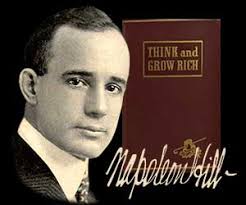
Napoleon Hill, born Oliver Napoleon Hill in 1883, is widely recognized as one of the earliest and most influential authors in the modern self-help genre. His most famous work, Think and Grow Rich, published in 1937, has sold millions of copies and remains a cornerstone of personal development and business success literature. It continues to be recommended by influential figures like Tony Robbins and Oprah Winfrey. However, Hill's impactful ideas are intertwined with a complex and often controversial personal history.
The Philosophy of Achievement: Principles for Success and Freedom
Hill's core philosophy, often referred to as his "Philosophy of Achievement," was initially published in his 1928 work, The Law of Success. He believed that success, defined as mental, physical, and spiritual freedom and purpose, could be achieved by adhering to specific principles. He argued that fervid expectations are essential to improving one's life.
Key concepts from Hill's works include:
Definiteness of Purpose: This is considered the starting point of all achievement. It involves defining your real aspirations, understanding their root motivation, and taking concrete steps towards making them a reality.
The Power of Thought: Hill famously stated that "thoughts are things". He argued that what one focuses on consistently in their mind manifests in reality, aligning with the "law of attraction". This concept emphasizes nurturing the right mindset and controlling thoughts to steer towards positive outcomes.
Faith and Auto-suggestion: Faith is described as a state of mind that allows aims, desires, and plans to be translated into their physical or financial equivalent. Auto-suggestion involves self-directed communication to influence the subconscious mind and create thought patterns conducive to achieving desires.
The Mastermind Alliance: This principle describes the "coordination of knowledge and effort in a spirit of harmony, between two or more people, for the attainment of a definite purpose". Hill believed these groups could multiply an individual's brain power and foster positive emotions.
Drifters vs. Non-Drifters: In Outwitting the Devil, Hill explores the concept of "drifters" as individuals who do little or no thinking for themselves, allowing external factors and emotions to dominate their lives, often falling into a "hypnotic rhythm" of fixation on the trivial. Conversely, non-drifters "think for themselves".
Finding One's Other Self: Hill posits that lives are built on two bases: faith and fear. The "other self," founded in faith, emerges during times of "unusual emergency" or adversity, forcing individuals to change habits and think their way out of difficulties. This is an "infinite intelligence" that can be accessed when fighting through doubt.
In Outwitting the Devil, a book deemed too controversial for its time (1938) and not released until 2011, Hill identified seven principles to attain mental, spiritual, and physical freedom and escape what he metaphorically calls "the devil's grasp":
1. Definiteness of Purpose
2. Mastery over self (discipline over impulse)
3. Learning from adversity (viewing failure as a temporary state and a signal for a new plan)
4. Controlling environmental influence (being mindful of associations and surroundings)
5. Time (cementing positive habits over time)
6. Harmony (questioning influences and being in control of one's views, opinions, and actions)
7. Caution (thinking before acting and distinguishing intuition from instinct)
Hill's work emphasizes that putting these seemingly simple strategies into practice is challenging, as most people fear the uncertainty of trying, failing, and growing, preferring safety and stagnation.
The Controversies: Unraveling the Claims
Despite the widespread influence of his work, Napoleon Hill's life and claims have faced significant scrutiny and accusations of fraud.
Disputed Interviews: Hill claimed his career-defining moment was a 1908 interview with industrialist Andrew Carnegie, who supposedly commissioned him (without pay) to interview over 500 successful individuals to distill a formula for success. However, modern historians widely doubt that this meeting, or his extensive interviews with figures like Henry Ford and Thomas Edison, actually occurred as described. There are "no known records" of these meetings beyond a brief photo op with Edison.
Fabricated Background: Hill reportedly exaggerated or fabricated aspects of his own background, including claims of growing up in poverty (when his family was involved in newspaper publishing) and being an attorney (despite no record of him performing legal services).
Failed Business Ventures and Fraud Charges: Throughout his early career, Hill was involved in numerous short-lived and failed business ventures, including the Acree-Hill Lumber Company, the Automobile College of Washington, and the George Washington Institute of Advertising, many of which faced accusations and charges of mail fraud and violating "blue sky laws". He also ran personal magazines that faced charges for fraudulent advertising and laundering funds.
Allegations of Cult Involvement and Personal Misconduct: Hill was accused of abuse, infidelity, and being involved with The Royal Fraternity of the Master Metaphysicians, a cult that reportedly regarded Think and Grow Rich as a religious text and attempted to raise an "immortal baby". Some critics have even called him "the greatest self-help scammer of all time".
Political Claims: Hill claimed to have been an advisor to Presidents Woodrow Wilson and Franklin Roosevelt, even asserting he had the power to veto the President during WWI. White House records, however, include no reference to him ever being there.
These controversies lead some to view Think and Grow Rich as "prosperity gospel meets snake oil," suggesting Hill's success was more a reflection of how capitalism rewards abuse than his genius.
Enduring Relevance: A Classic with a Modern Twist?
Despite the significant criticisms regarding his personal integrity and the veracity of his historical claims, Napoleon Hill's Think and Grow Rich remains a widely read and impactful book.
Timeless Principles: Many readers and advocates argue that the principles themselves are sound and universally applicable, regardless of whether Hill's personal stories were factual. Concepts like desire, faith, persistence, and definite purpose are considered timeless truths.
Action-Oriented Approach: The book's strength lies in its action-oriented framework, outlining 13 specific steps to translate desires into reality, bridging the gap between ideas and realization through purposeful effort.
Practical Application: Successful individuals, including "Shark Tank" investors Daymond John and Robert Herjavec, and even Bruce Lee, have publicly attributed their success to the book's teachings. They emphasize that the value comes from applying the principles, not from focusing on Hill's personal history.
Mindset and Accountability: Hill's emphasis on taking control of one's thoughts and accepting responsibility for feelings and reactions is a core stoic belief that resonates with many. The idea that "You have absolute control over just one thing, your thoughts" empowers individuals to adopt a growth mindset.
Inspiration for Self-Improvement: For many, the book serves as a powerful motivator, stimulating creativity and encouraging persistence in the face of challenges.
However, some critics note the book's "lack of tangible guidance" and a "narrow definition of success," primarily equating it with wealth accumulation, which can feel outdated in a world seeking holistic fulfillment. The "overly idealistic mindset" might also dismiss real-world barriers like systemic inequality.
Ultimately, the relevance of Think and Grow Rich today depends on individual expectations. It serves as a foundational text for high-level principles of success, inspiring mindset, belief, and persistence. While it may lack detailed, step-by-step guidance for a contemporary context, its core message of transforming thoughts into tangible reality through unwavering determination continues to resonate with countless aspiring individuals.